AKTUELLES

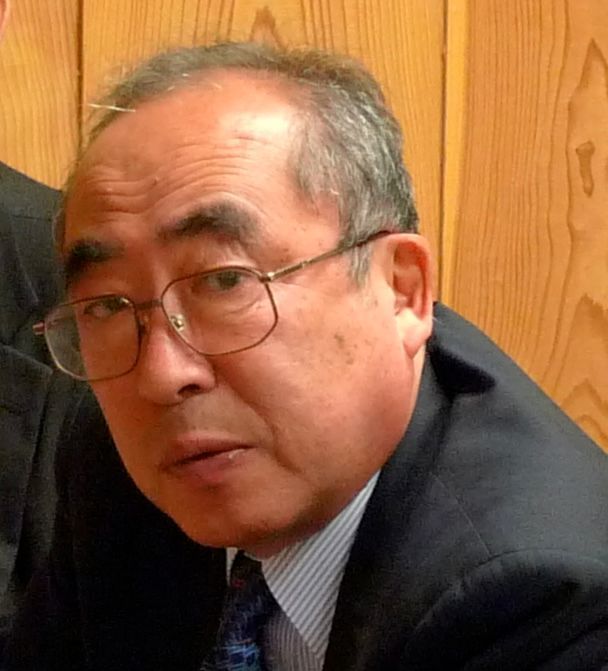
In Memoriam Prof. Tanaka Naoki (1943-2026)


Wie wir vor kurzem erfahren haben, ist am 3. April dieses Jahres Prof. Tanaka Naoki (Nihon Universität) im Alter von 83 Jahren in Tōkyō verstorben. Prof. Tanaka gehörte zum Kreis der Forscher um Prof. Hidemura Senzō (Kyūshū Universität), die sich seit den 1970er Jahren mit dem Kohlebergbau in Japan und speziell in Nord Kyūshū befassten. Sie erlebten in dieser Zeit den rasanten Niedergang dieses einst so wichtigen Wirtschaftszweiges und bemühten sich, die von der Vernichtung bedrohten Archivbestände der ehemaligen Bergwerke und andere Dokumente sowie konkrete Objekte für die Forschung zu erhalten und dadurch die Erinnerung an dieses Erbe zu bewahren. 


In späteren Jahren wurde Prof. Tanaka zu einem der wichtigsten Unterstützer beim Aufbau unserer privaten Japanbibliothek, die heute ein wichtiger Teil der CEEJA Japan Library ist. Nicht nur durch die Überlassung umfangreicher Bestände, sondern auch ganz praktisch, indem er uns über viele Jahre hin einen Raum in seinem Institut an der Nihon Daigaku zur Verfügung stellte, um die aus verschiedenen Gegenden in Japan eingehenden Bücherspenden dort zu lagern, bevor wir sie von dort in einem Container nach Hamburg verschifften. 


Prof. Tanaka war uns seit mehr als 50 Jahren Mentor und Freund, dem wir uns eng verbunden fühlten. Sein Tod ist ein großer Verlust und wir möchten seiner Familie und seinen Kollegen und Freunden unser tiefempfundenes Mitgefühl aussprechen.


Regine Mathias und Erich Pauer

NEW PUBLICATION

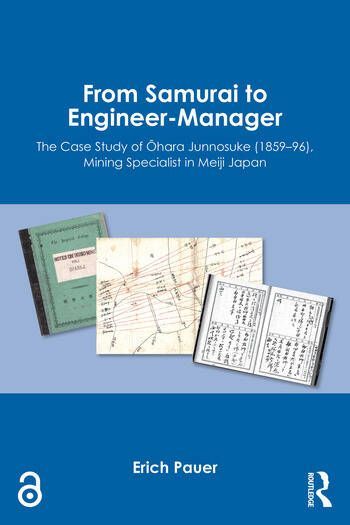
Erich PAUER

From Samurai to Engineer-Manager

The Case Study of Ōhara Junnosuke (1859–96), Mining Specialist in Meiji Japan


From Samurai to Engineer-Manager reconstructs the life and work of the Japanese mining engineer Ōhara Junnosuke in the early decades of Japan’s industrialization.

While Japan's political and socio-economic development during the Meiji period has been extensively researched, the technological/technical foundations that were crucial to its success have remained largely obscure. Drawing on unique, mostly handwritten sources including lecture notes, internship and work experience reports, travelogues and diaries etc., the example of Ōhara Junnosuke illustrates the beginnings of modern engineering education in Japan and its intertwining with the subsequent professional career of the protagonist.

Born in 1859 into a samurai family in rural Japan, Ōhara studied mining for six years at the Imperial College of Engineering (ICE, kōbu-daigakkō) in Tōkyō from 1878 to 1884. The ICE, founded in 1873, was the first higher technical school in Japan with ten different technical divisions, later, in 1886, becoming Faculty of Engineering at the University of Tōkyō. At the ICE all classes were given in English by mostly Scottish teachers from Glasgow University. In this “school” students were trained in both fields, namely “engineering” and “management”, which were exactly the needs of a country at the brink of industrialization at that period.

After graduation with excellency from the ICE Ōhara worked first for the Ministry of Public Works, then joined the private mining company Fujita Gumi. He became head manager of the large silver mine Ōmori ginzan in Iwami (today an UNESCO World Heritage). There he oversaw the construction of a modern silver production plant. Unfortunately, his premature death in 1896 ended a promising career of one of the earliest engineers and managers in the field of mining in Japan.

Ōhara’s education and professional career analyzed in this study are in many ways typical of Japan’s emerging technical elite and their contribution to modern industrialization in nineteenth century Japan.


The Open Access version of this book, available at

http://www.taylorfrancis.com, has been made available under a Creative Commons Attribution-Non Commercial-No Derivatives (CC BY-NC-ND) 4.0 license.

https://doi.org/10.4324/9781003696186


 TABLE OF CONTENTS


Notes to the reader


1. Prologue: Some personal remarks on the history of the Ōhara Papers

A surprising discovery

ICE, the lecture notes and other documents and sources

Ōhara Junnosuke and his professional life

Ōhara Junnosuke: The man

The future of the Ōhara Papers – A brief outlook


2. Technical education on the eve of Japan’s industrial revolution – An overview

The beginnings of an education system

From education to ‘technical education’

Engineers are what the country needs!


3. Ōhara Junnosuke: Engineer and manager – A biographical sketch

Why Ōhara’s biography matters

Ōhara Junnosuke: Birth, youth and general education

The step towards higher education: The Imperial College of Engineering

Studying at the ICE

First lessons for First Year Cadet Ōhara Junnosuke

Study content: Curricula vs. lecture notes

From latecomer to first-class student

Ōhara Junnosuke on tour

Done: Graduation!


4. To new shores

Employment at the Ministry of Public Works (Kōbushō)

Field research in Ashio

Foundation of the Mining and Metallurgical Institute of Japan

Field research in Kyūshū

Ōhara on tour again: The diary

Inspection trip to Ōita (Bungo province)

Inspection trip to Miyazaki (Hyūga province)

Inspection tour in Kagoshima (Provinces Ōsumi and Satsuma)

The investigation questionnaire (Chōsa-roku)

Results of the inspection tour in Kyūshū


5. From civil service to private industry

Fujita-gumi

Silver mining in Japan and the Iwami silver mine: A short history

Fujita-gumi and Ōmori-kōzan (Iwami-ginzan)

Dreams: Modern technology and its pitfalls


6. Conclusion


7. Epilogue


Appendix 1-3

·     William Gray Dixon, The Land of the Morning. An account of Japan and its people, based on a four years’ residence in that country

·     Kōgaku-ryō narabi ni sho kisoku

·     Examination papers for the entrance examination to the Imperial College of Engineering


References


Index